So there I was, iterating like a madman
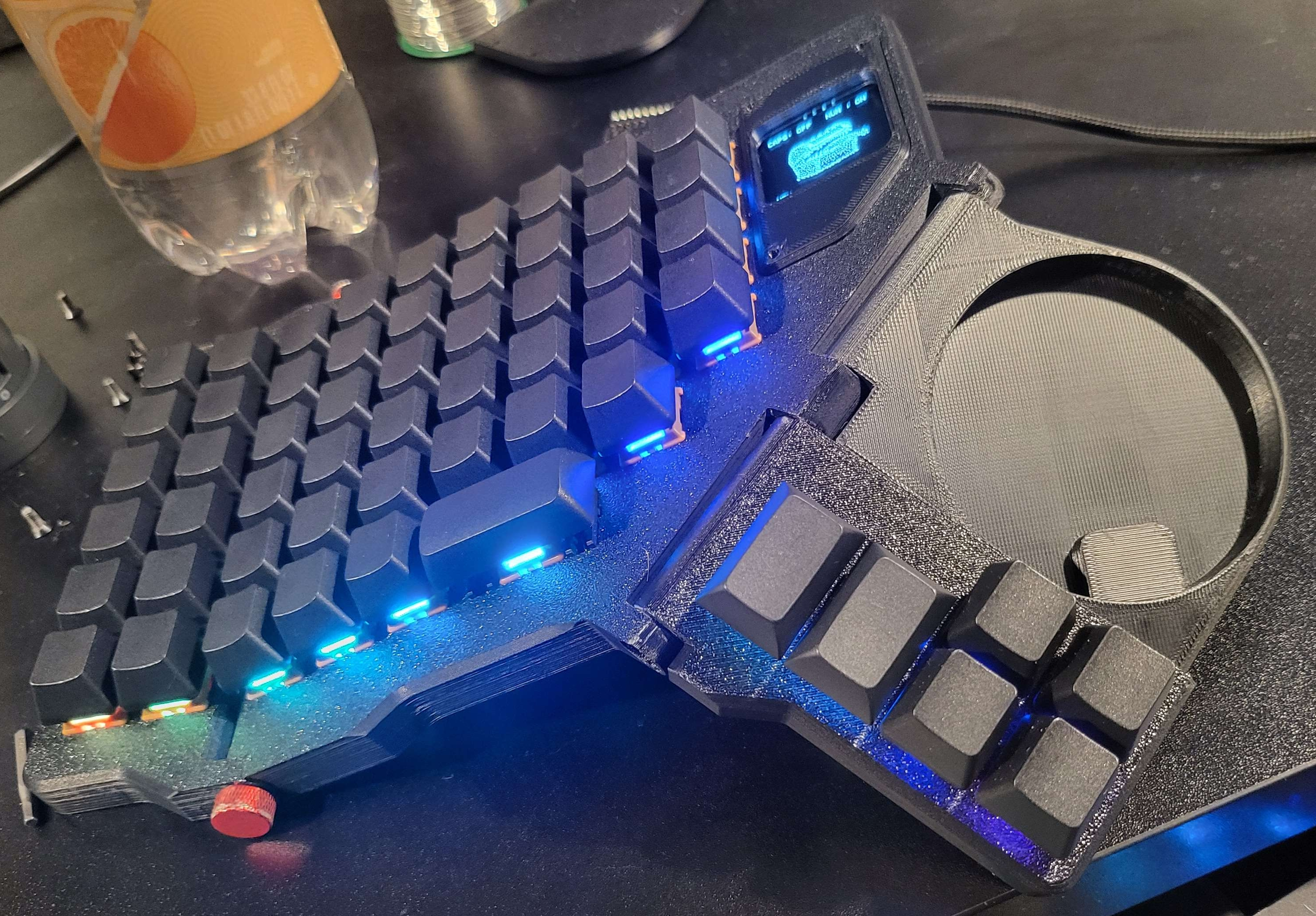
This stage was quite the process. It involved moving from a solid color backlight to a true position aware LED Matrix not to mention building the UI and implementing the screen control.
I made the matrix layers fully reversible and I set up the communications to work with the controller regardless of the side it was mounted on. What this achieved was about 63% reduction in cost. What started as 6 boards for the matrix, 2 for the controllers was now 4 boards total and functionally reversible in implementation. This no longer meant I ordered left or right halves separately. Why is this important? For people that only need one side this made the production cheaper which in turn makes it more approachable. The other aspect of this, repairability. As a consumer and engineer I value products that keep me in mind and so I incorporate those things I value into my products as well. Fundamentally, this keyboard is now as repairable as possible and the groundwork is laid to allow for upgrades in the future. Now each keyboard is much more environmentally friendly because it won’t become obsolete! Oh and I designed the UI and got it up and functional too.
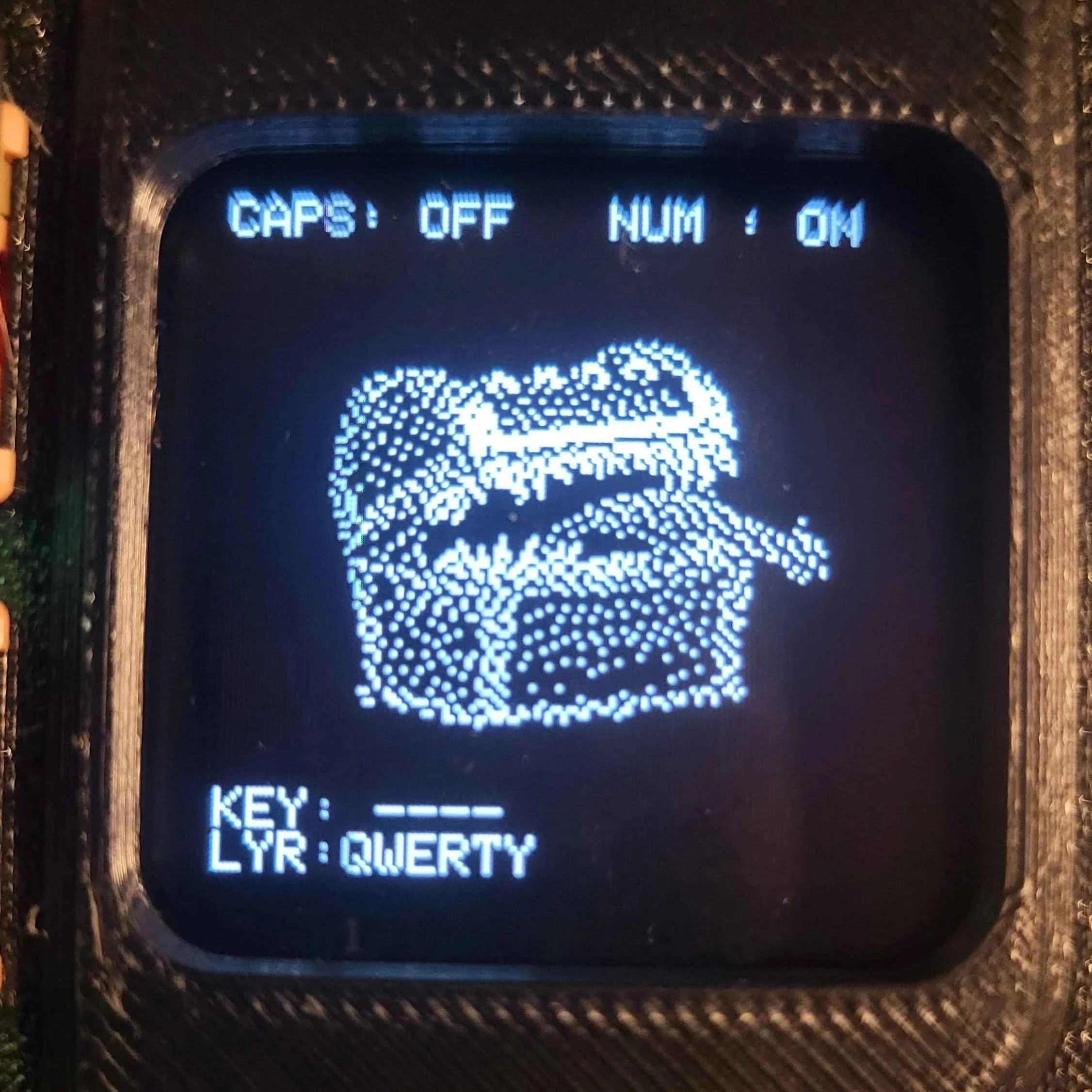
Here it is! The full functionality of the OLED had been unleashed and to assist the user the UI reflects the last key press, active layer, and the system CAPS and NUMLOCK statuses in real time. Took some throttling of the OLED scan speed and update limit tweaking but it was done!