My Solution to a Long-Running Problem
It All Began Here
Short story time: When I was in the Navy I spent my free time exploring the areas of academia that interested me. One of those paths was Electrical Engineering but more specific to this project, custom keyboards. Once I learned to make functional keyboards from existing kits I realized I could sell them to collectors or to those who didn’t have the means or time to make one themselves. While doing this I stumbled into a world I couldn’t have predicted, making accessibility solutions for veterans and those with physical disabilities. Unfortunately, if you’re unfamiliar with split keyboards, all keyboards I have found to date operate from the Left to the Right. The main control is passed through the left to the right enabling full functionality. But for some of my clients without a left hand/arm… They didn’t need the left half. But the industry and available options had never taken this into account and we were left heavily compromising and with a functional but unused left keyboard. So once I had learned more and delved deeper into the EE world I realized I could make a solution to this while throwing in some bells and whistles to make it functional and helpful to anyone no matter their preferences or needs. And so the Teravolt was born! This keyboard is a fully modular, independently operating power house designed to be modified, customized, and capable of being tailored to the individual. Let’s take a look in depth:
First was establishing the concept
It All Begins Here
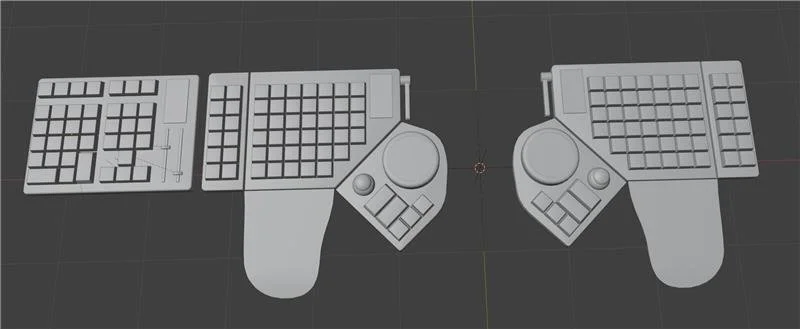
The early mockup in Blender
First came the concept, what was needed and what did I want?
At the time of conception I had recently received my ZSA Moonlander, a highly capable and comfortable split keyboard so I had a reference that I personally enjoyed and used it as a foundation.
My Criteria was:
Each half MUST operate independently to support users needing only one half
The halves should tent to enhance ergonomics
The Function row must be included
There must be slots for modules to dock
The outer edges must support addon number pads or macro pads
So I set out to make something user-oriented, reasonably priced, and relatively simple in execution.
Next came one revision after the other…
It All Begins Here
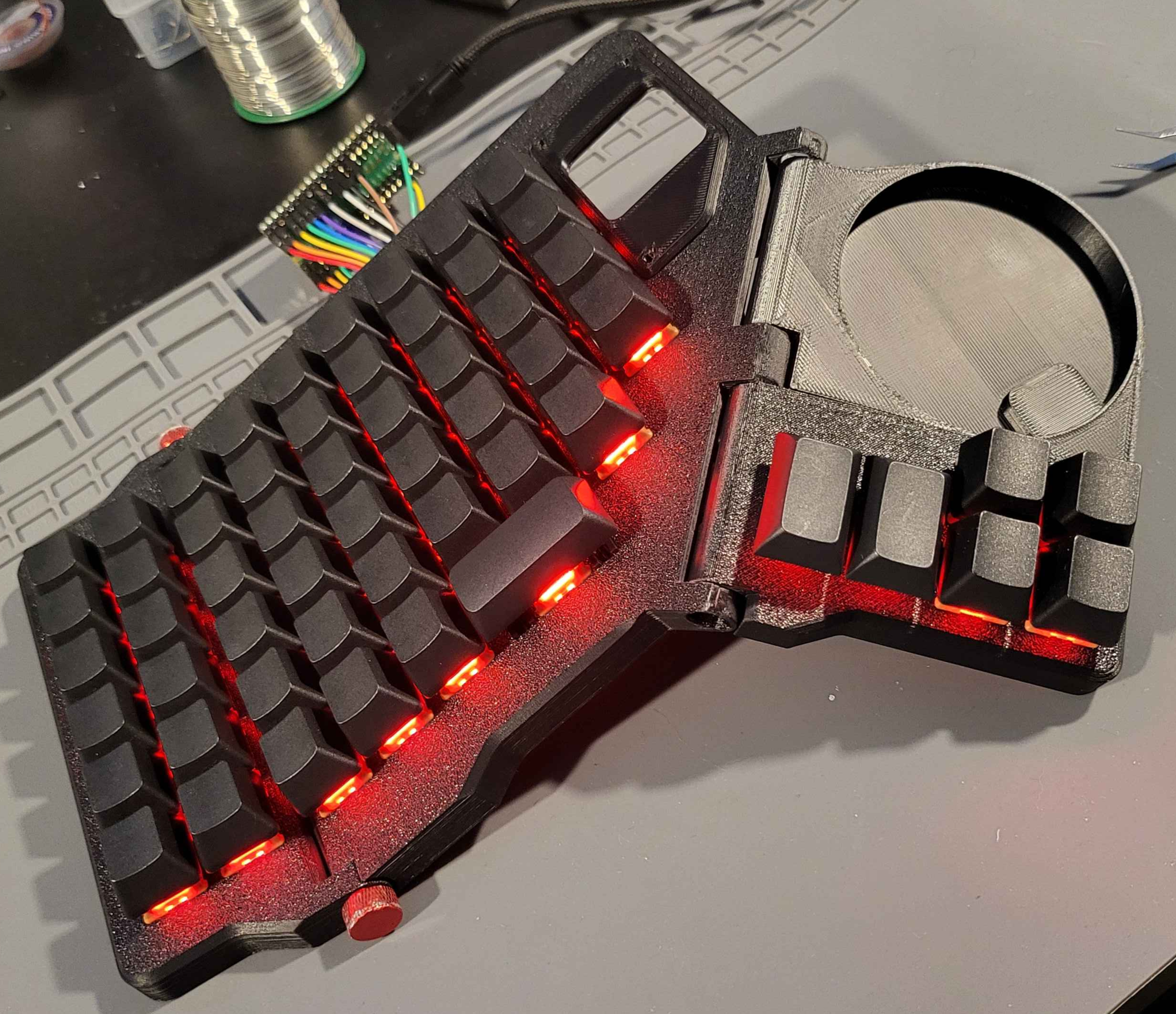
First functional prototype with a working backlight. Still no UI at this stage
Version 1 brought to light mechanical obstacles I would need to take into account when it came to the case, then the case drove changes to the PCBs (Circuit Boards). Things stayed in pendulous compromise until Version 4. That’s when the module slot was fully standardized and set in stone. The hinges and cross board communication was now settled as well. But most importantly, the matrix was finalized and the responsibilities of each board were set in stone. The next design challenge was cutting costs and ensuring the design was as robust as possible which meant making the matrix layer reversible and designing the control board in such a way that it could control either side without needing a unique version.

So there I was, iterating like a madman
It All Begins Here
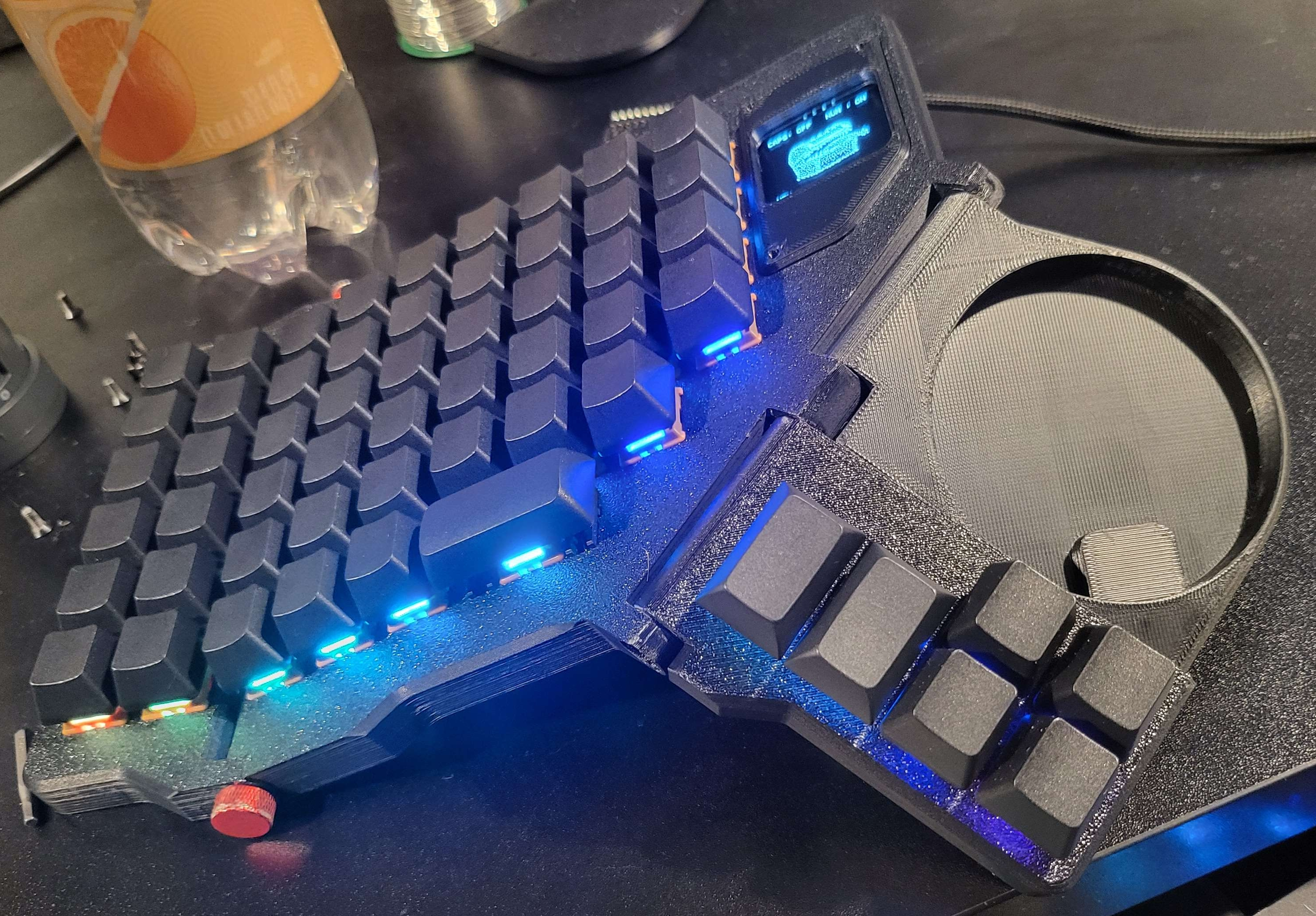
This stage was quite the process. It involved moving from a solid color backlight to a true position aware LED Matrix not to mention building the UI and implementing the screen control.
I made the matrix layers fully reversible and I set up the communications to work with the controller regardless of the side it was mounted on. What this achieved was about 63% reduction in cost. What started as 6 boards for the matrix, 2 for the controllers was now 4 boards total and functionally reversible in implementation. This no longer meant I ordered left or right halves separately. Why is this important? For people that only need one side this made the production cheaper which in turn makes it more approachable. The other aspect of this, repairability. As a consumer and engineer I value products that keep me in mind and so I incorporate those things I value into my products as well. Fundamentally, this keyboard is now as repairable as possible and the groundwork is laid to allow for upgrades in the future. Now each keyboard is much more environmentally friendly because it won’t become obsolete! Oh and I designed the UI and got it up and functional too.
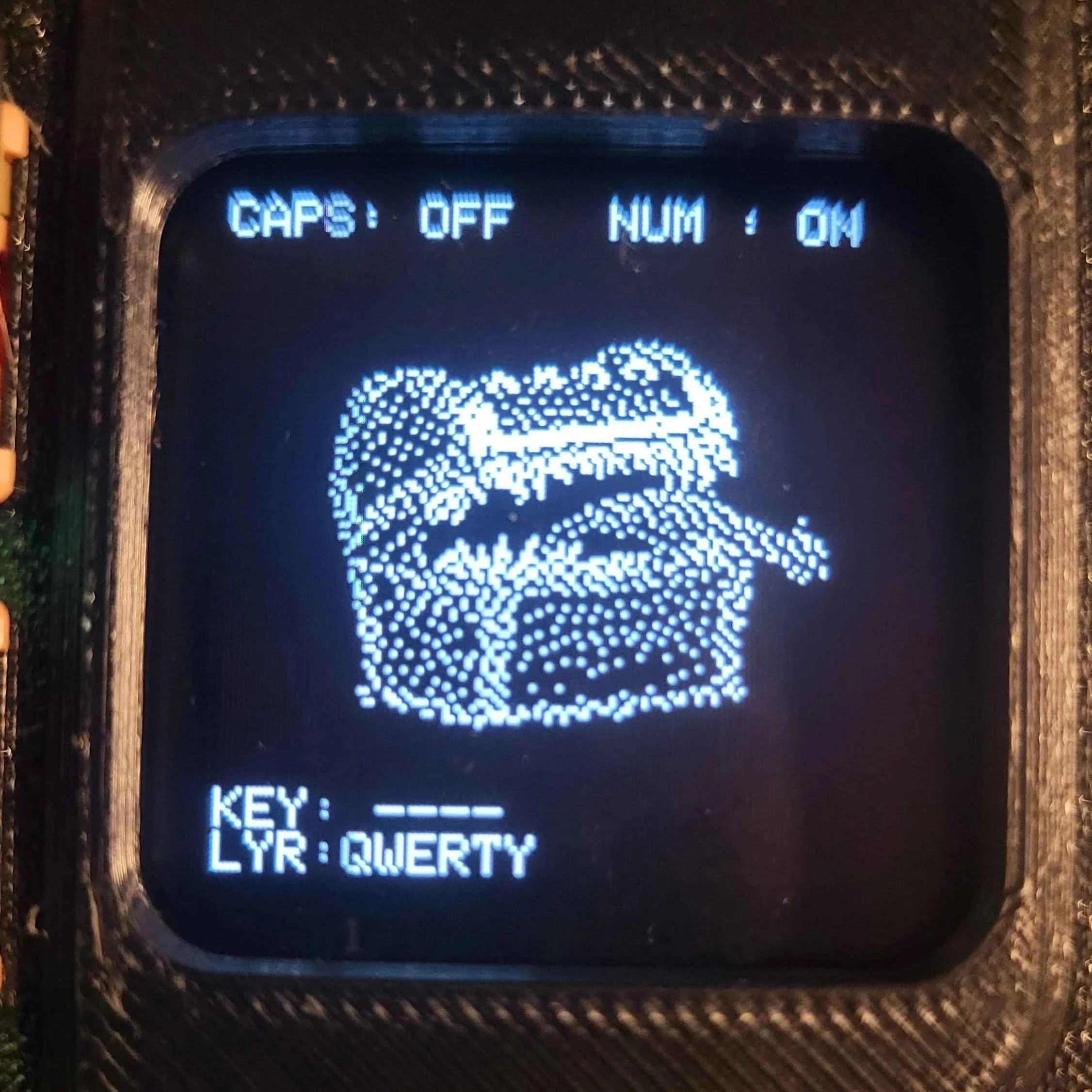
Here it is! The full functionality of the OLED had been unleashed and to assist the user the UI reflects the last key press, active layer, and the system CAPS and NUMLOCK statuses in real time. Took some throttling of the OLED scan speed and update limit tweaking but it was done!